
LEDA


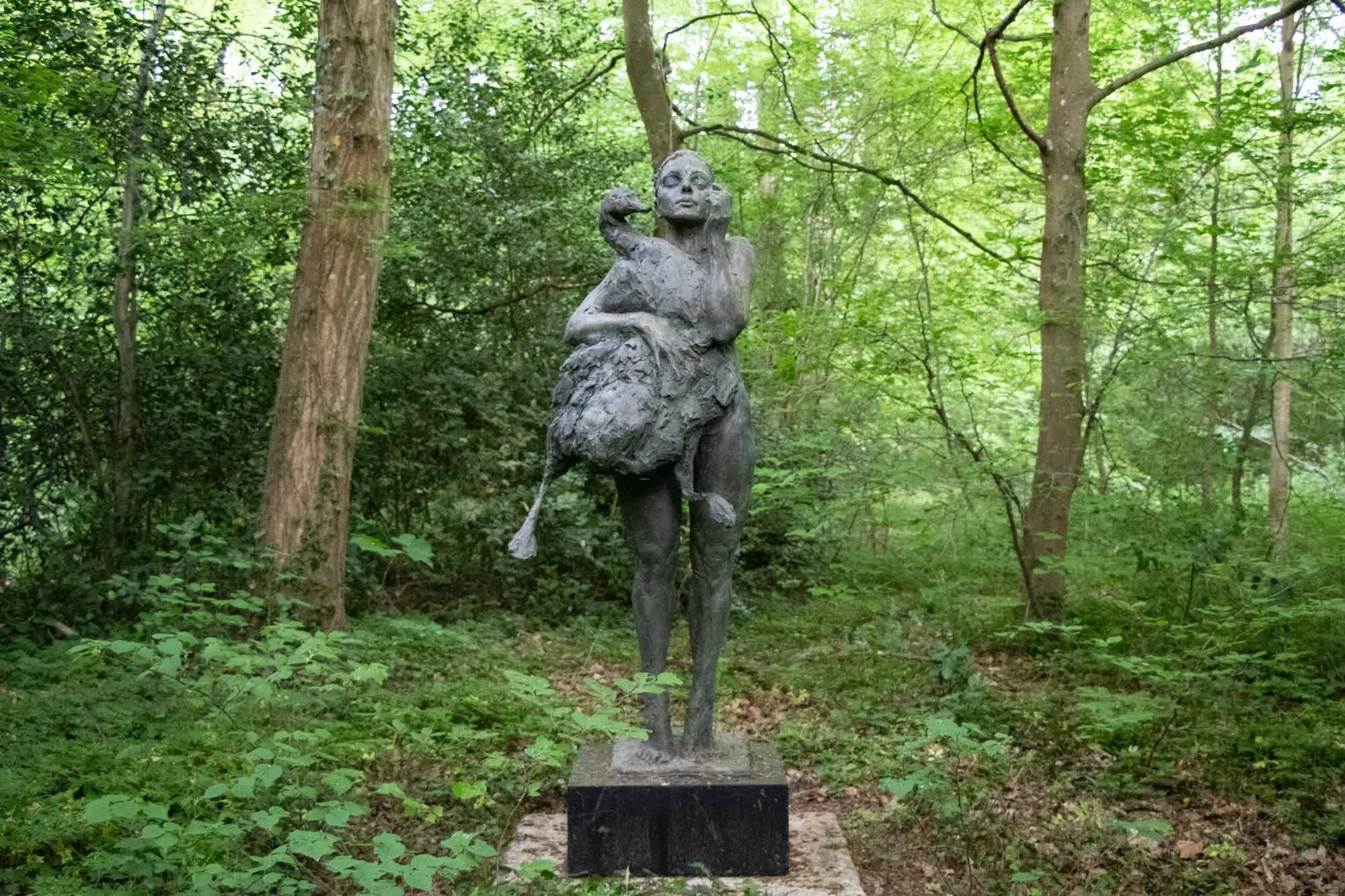
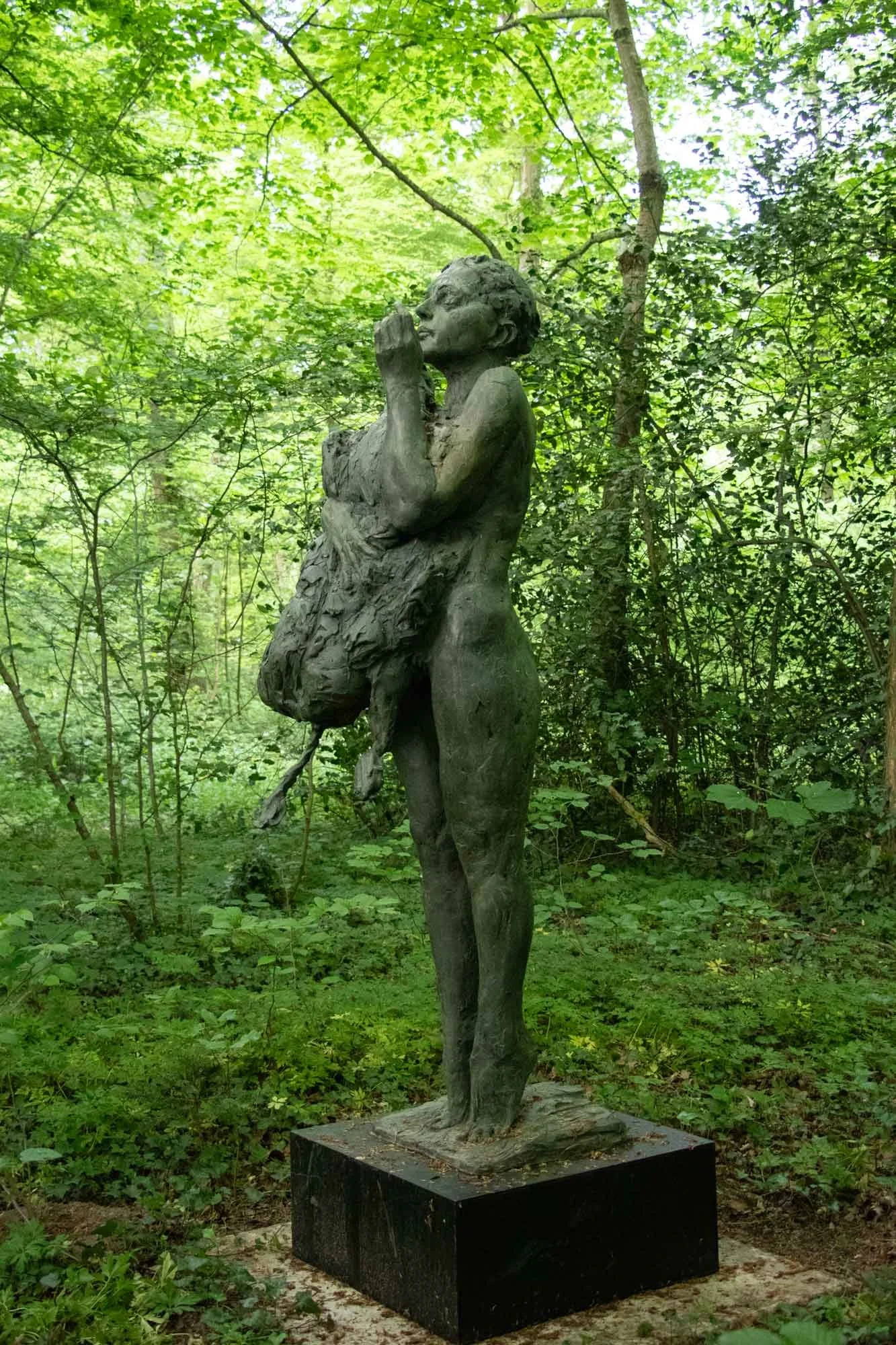


LEDA
Bronze, 2018
Edition sur 8 + 4 EA
201 x 65 x 70 cm
LEDA
Dans Léda, Patrick Villas s’empare du célèbre mythe grec dans lequel Zeus, épris de Léda, reine de Sparte, prend la forme d’un cygne pour la séduire. De cette union divine et animale naîtront, selon la légende, Hélène de Troie et les Dioscures, figures fondatrices de la mythologie. Ce récit, symbolise la métamorphose, la frontière poreuse entre le divin, l’humain et l’animal. Villas s’en saisit pour explorer cette tension primitive, où la grâce et la puissance se mêlent, où l’étreinte devient un lieu d’ambiguïté et d’émotion.
Cette sculpture marque une étape déterminante dans le parcours de l’artiste. Connu principalement pour ses représentations animales et plus particulièrement ses félins Patrick Villas délaisse ici la seule animalité pour modeler, pour la première fois, un corps et un visage féminins. Si la figure de la femme habitait déjà ses dessins, elle n’avait encore jamais pris forme dans sa sculpture. Léda devient ainsi une œuvre charnière, une véritable innovation dans sa démarche plastique : la rencontre entre le monde animal qui l’a toujours inspiré et la figure humaine, symbole d’émotion, de fragilité et de mystère.
La sculpture se distingue par la finesse du modelé et la tension expressive des lignes. La douceur des courbes féminines contraste avec la densité de la matière, et la légèreté du cygne semble se fondre dans la force du corps humain. Dans ce mouvement suspendu entre union et résistance, Villas traduit la complexité du mythe : la beauté se fait violence, l’abandon devient puissance.
Au-delà de la légende, Léda interroge la nature même de la création : la coexistence de l’instinct et de la conscience, de la chair et de l’esprit. En quittant le territoire exclusif de l’animal pour introduire la figure humaine, Patrick Villas ouvre une nouvelle voie dans son œuvre. Léda n’est pas seulement une réinterprétation mythologique, mais une métamorphose artistique, elle d’un sculpteur qui, en unissant femme et animal, explore la profondeur du vivant et la beauté de ses contradictions.
Léda
In Léda, Patrick Villas takes up the famous Greek myth in which Zeus, enamored with Léda, queen of Sparta, takes the form of a swan to seduce her. According to legend, this divine and animal union gave birth to Helen of Troy and the Dioscuri, founding figures of mythology. This story symbolizes metamorphosis and the porous boundary between the divine, the human, and the animal. Villas uses it to explore this primitive tension, where grace and power intermingle, where the embrace becomes a place of ambiguity and emotion.
This sculpture marks a decisive step in the artist's career. Known mainly for his animal representations, particularly felines, Patrick Villas here abandons animality alone to model, for the first time, a female body and face. Although the female figure already featured in his drawings, it had never taken shape in his sculpture. Leda thus becomes a pivotal work, a true innovation in his artistic approach: the encounter between the animal world that has always inspired him and the human figure, a symbol of emotion, fragility, and mystery.
The sculpture stands out for its delicate modeling and expressive lines. The softness of the feminine curves contrasts with the density of the material, and the lightness of the swan seems to melt into the strength of the human body. In this movement suspended between union and resistance, Villas conveys the complexity of the myth: beauty becomes violence, abandonment becomes power.
Beyond the legend, Leda questions the very nature of creation: the coexistence of instinct and consciousness, flesh and spirit. By leaving the exclusive territory of the animal to introduce the human figure, Patrick Villas opens a new path in his work. Leda is not only a mythological reinterpretation, but an artistic metamorphosis, that of a sculptor who, by uniting woman and animal, explores the depth of life and the beauty of its contradictions.


